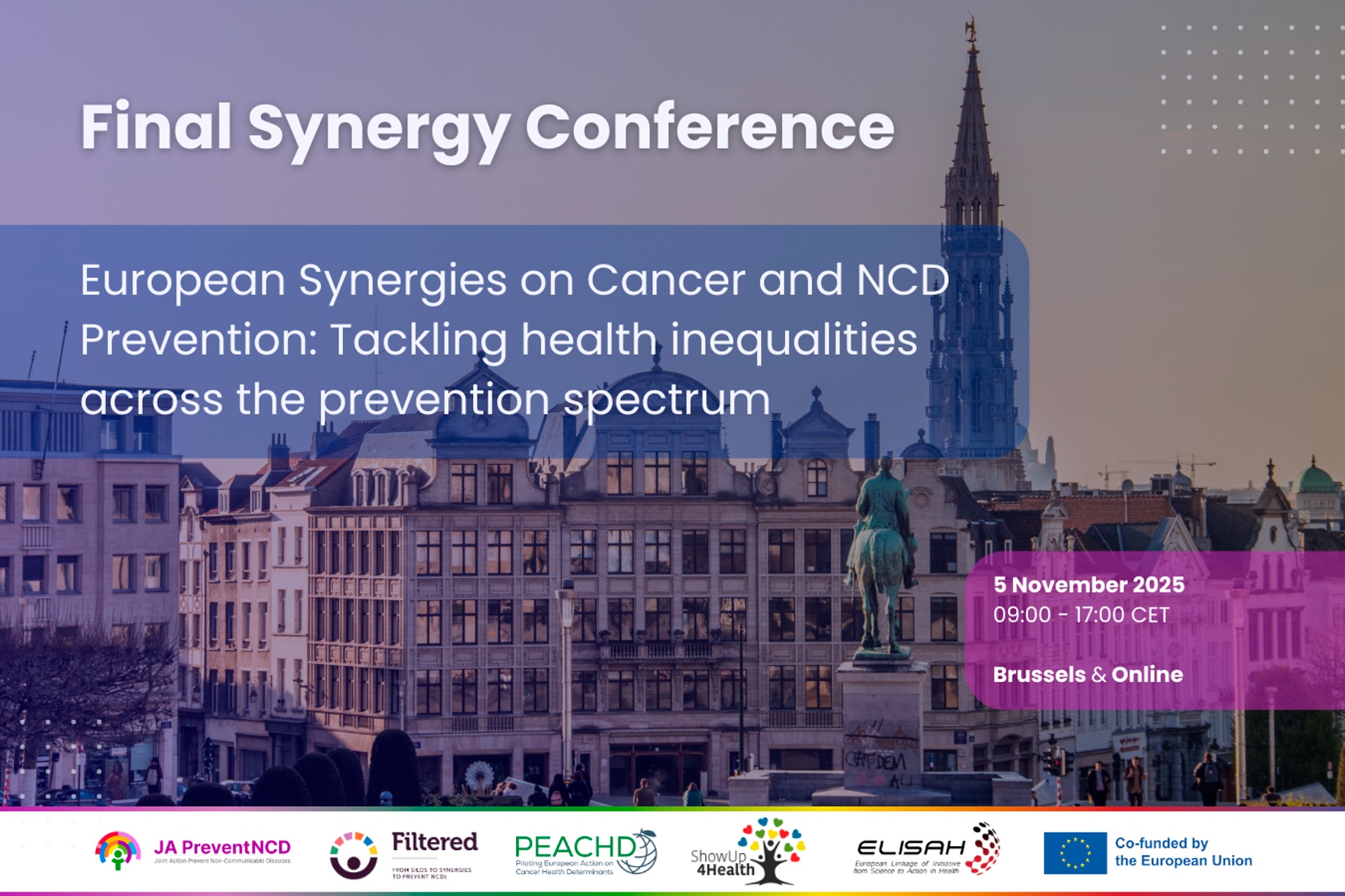
Final Synergies Conference
November, 5 2025
Stronger Together: Fighting Cancer and Other Diseases with European Collaboration
The recent policy brief, "Stronger Together: European Collaboration to Prevent Cancer and Other NCDs and Reduce Health Inequalities," highlights how European initiatives are teaming up to tackle the growing problem of non-communicable diseases (NCDs) like cancer, heart disease, and diabetes, which are the main causes of illness and early death in Europe1.
Why Collaboration is Key
NCDs are largely preventable, as they are often linked to factors like tobacco use, unhealthy diets, and lack of physical activity. However, the burden of these diseases falls heaviest on people who are already disadvantaged, such as those with lower incomes, migrants, and ethnic minorities. These inequalities persist between and within countries.
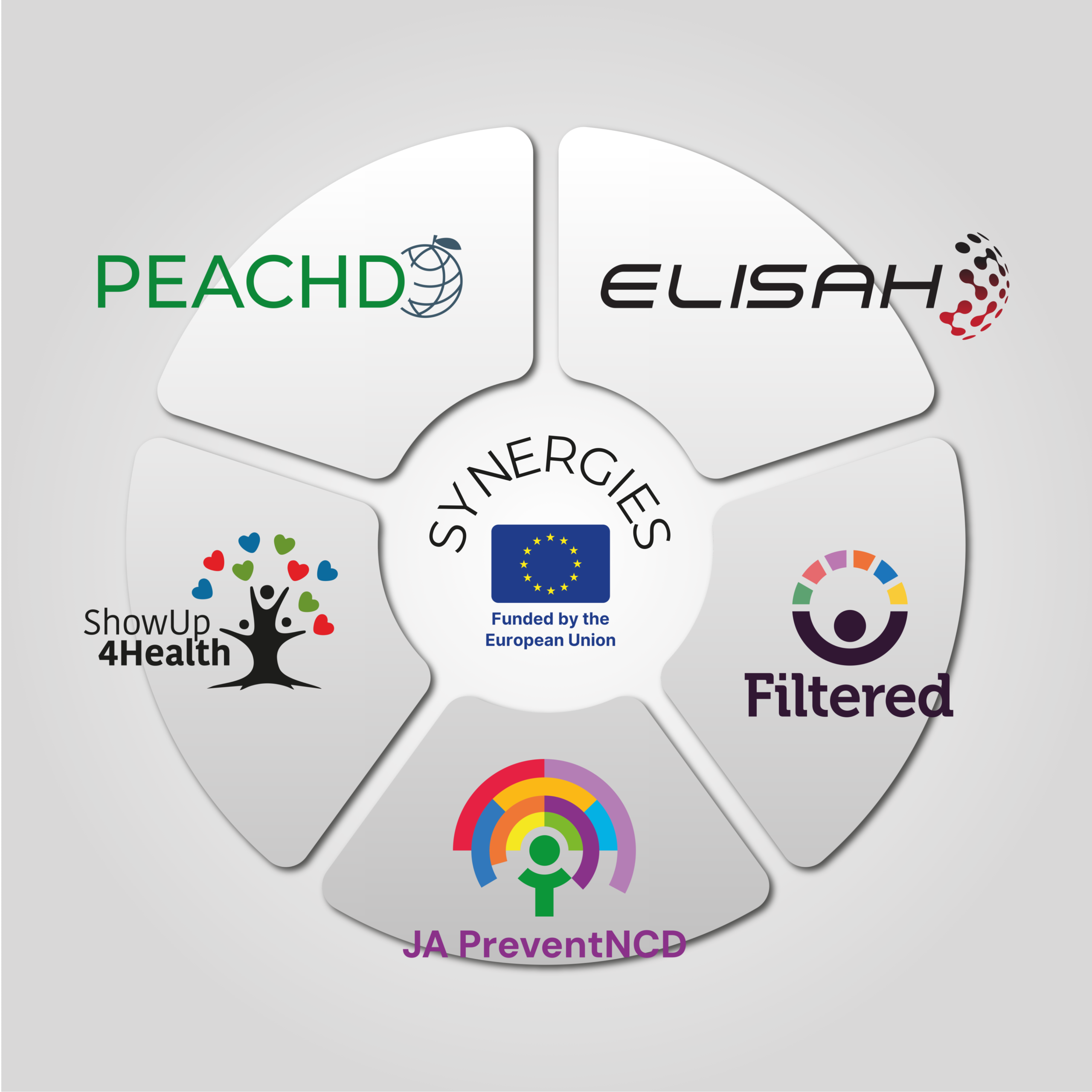
This joint effort—involving projects like ELISAH (focused on breast cancer), PEACHD, FILTERED, ShowUp4Health, and the Joint Action PreventNCD—recognizes that to close this health gap, we need coordinated action across Europe.
Key Conclusions for a Healthier Europe
The collaborative projects call for a three-part approach to make prevention work for everyone:
1. Aligning Policies and Funding: EU strategies, such as Europe's Beating Cancer Plan, must be united with other health and funding initiatives (like EU4Health) to create a single, strong focus on prevention and equity across all EU policies.
2. Robust Measures and Local Action:
3. Community-Driven Support: Prevention must be integrated where people live—in schools, workplaces, and community centres—by linking social and health services. Interventions must be co-designed with diverse communities (considering gender, age, culture, etc.) to ensure they are flexible, inclusive, and truly reach those who need them most, promoting sustainable lifestyle changes. By working together across all levels—from the EU to local communities—Europe can build a stronger system to prevent diseases and ensure a healthier future for all citizens.
By working together across all levels—from the EU to local communities—Europe can build a stronger system to prevent diseases and ensure a healthier future for all citizens.